The landscape of modern education is undergoing a massive, unprecedented paradigm shift. Across bustling classrooms in Seoul, Beijing, Tokyo, and online virtual academies catering to Asian students, Artificial Intelligence (AI) has firmly transitioned from a futuristic concept into an everyday essential classroom companion. For ESL (English as a Second Language) teachers, embracing AI is no longer optional—it is the ultimate key to staying competitive, reducing professional burnout, and delivering hyper-personalized learning experiences that resonate with today’s tech-savvy generation.
If you are actively teaching English in Asia or managing a growing online ESL platform, understanding how to strategically leverage AI tools can radically elevate your teaching quality and professional efficiency. This comprehensive, in-depth guide explores how AI is reshaping ESL education across Asia and provides actionable insights on how you can harness its full potential to advance your career.
1. Hyper-Personalized Learning: Tailoring English for Every Student in Asia
Traditional classrooms have long struggled with the age-old “one-size-fits-all” dilemma. In countries like South Korea, China, and Japan, class sizes can vary dramatically, and students invariably possess vastly different learning speeds, cognitive strengths, and proficiency levels.
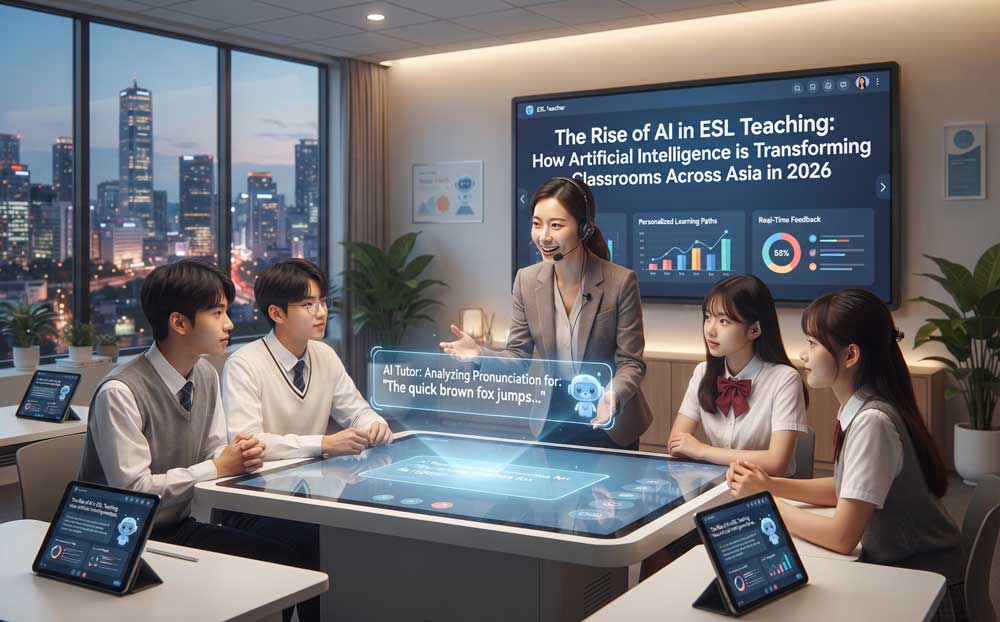
- Adaptive Learning Algorithms: Modern AI-driven platforms dynamically analyze a student’s individual strengths and weaknesses in real-time. These systems automatically adjust grammar exercises, vocabulary lists, and reading comprehension tasks to suit each student’s precise proficiency level, ensuring no one is left behind or bored.
- Targeted Phonunciation Feedback: AI speech-recognition tools can pinpoint subtle phonetic errors made by native Asian language speakers—such as distinguishing between the English “L” and “R” sounds for Japanese or Korean speakers, or managing tone nuances for Mandarin speakers—and provide instant, automated corrections without causing student anxiety.
- Customized Pacing: Students who need extra reinforcement on complex past-tense rules or advanced idioms receive supplementary practice modules automatically generated by AI engines.
2. AI-Powered Lesson Planning and Advanced Content Creation
Lesson planning historically consumed hours of valuable free time spent searching through heavy textbooks, physical worksheets, and scattered online resource banks. Today, generative AI tools act as reliable virtual co-teachers, streamlining administrative tasks and optimizing workflow.
- Instant Material Generation: Teachers can prompt advanced AI models to create custom reading passages, modern dialogue scripts tailored specifically to cultural contexts in East and Southeast Asia, or highly engaging quiz questions within seconds.
- Differentiated Worksheets: An AI tool can ingest a single core news article or story text and instantly generate three distinct versions: a simplified beginner level, a moderate intermediate version, and an advanced conversational breakdown.
- Engaging Gamification: AI helps educators rapidly develop interactive word games, trivia challenges, and role-play scenarios that capture the attention of digital-native students in modern Asian academies.
3. Bridging Cultural and Language Barriers in the Classroom
Teaching English abroad or online often involves navigating initial language barriers, especially when dealing with absolute beginners, young learners, or students experiencing severe language anxiety.
- Smart Translation and Contextual Aids: While total reliance on translation is generally discouraged in immersion teaching, AI assists teachers in finding precise contextual equivalents or explaining complex Western idioms by securely bridging native language nuances.
- Interactive Chatbots for Conversational Practice: Students can practice conversational English outside of school hours using safe, AI-powered conversational agents that simulate real-world scenarios—such as ordering food at a Western restaurant, checking in at an international airport, or conducting a job interview—without the fear of human judgment.
- Building Confidence: Introverted or shy students often find it much easier to converse, practice speaking, and make mistakes with an AI chatbot before attempting to speak in front of a live classroom or foreign teacher.
4. Overcoming Classroom Challenges: The Human Element Remains Irreplaceable
While artificial intelligence brings unprecedented efficiency, speed, and analytical power to ESL teaching, it is vital to balance cutting-edge technology with genuine human connection and professional judgment.
- Empathy, Mentorship, and Cultural Nuance: AI can never replicate the emotional intelligence, deep cultural empathy, and heartfelt motivational support that a human teacher provides. Building authentic rapport with students in Asian classrooms relies heavily on mutual cultural respect and personal interaction.
- Critical Thinking and Ethical AI Use: Teachers must guide students to use AI responsibly—treating it as a collaborative assistant or brainstorming partner rather than a cheap shortcut for cheating or automated essay generation.
- Classroom Management: Real-time behavioral management, conflict resolution, and fostering a collaborative peer environment remain exclusive domains of skilled human educators.
Conclusion: The Future of ESL Teaching Across Asia
As we navigate through 2026, artificial intelligence is definitively proving to be a powerful, indispensable ally rather than a threat or replacement for ESL educators. By systematically integrating AI-driven tools into your daily workflow, you can save valuable hours on administrative lesson planning, offer granular, tailored feedback to every single student, and construct vibrant, dynamic, and interactive learning environments.
Whether you are teaching inside a traditional brick-and-mortar school in East Asia or conducting high-engagement classes via global online platforms, mastering AI literacy will completely set you apart as a forward-thinking, high-performing educator ready for the future of education.
Frequently Asked Questions (FAQs)
Q: Will AI eventually replace ESL teachers in Asia?
A: Absolutely not. While AI excels at handling repetitive administrative tasks, data analysis, and personalized grammar drills, it fundamentally lacks human empathy, cultural intuition, and real-time emotional adaptability, which are core pillars of effective language teaching.
Q: What are the best AI tools currently available for ESL lesson planning?
A: Generative language models (like ChatGPT and Claude), automated quiz generators, and speech-to-text pronunciation assessment tools are currently the most popular, reliable, and effective assets utilized by modern ESL professionals worldwide.
Q: How do typical Asian students react to the introduction of AI in language learning?
A: Generally speaking, tech-savvy student populations in hyper-digital regions like South Korea, China, Japan, and Taiwan embrace AI educational tools with immense enthusiasm, especially when integrated with interactive or gamified learning elements.
Q: Can AI help online ESL teachers who work independently?
A: Yes, absolutely. Independent online tutors often struggle with workload management. AI tools help them scale their business by drafting marketing copy, designing custom curriculums, and grading student assignments in a fraction of the usual time.

